
Press Alt+0153 on a Windows numeric keypad, Option+2 on a Mac, or Ctrl+Alt+T inside Microsoft Word or Outlook, and ™ appears instantly. For the registered symbol, swap in Alt+0174 on Windows or Option+R on Mac. No keyboard shortcut working? Copy ™ or ® straight from this page, or pull them from your operating system’s built-in symbol picker.
- Windows: Alt+0153 (™) or Alt+0174 (®), using the numeric keypad
- Mac: Option+2 (™) or Option+R (®)
- Mobile: tap the symbol/number key on your keyboard and long-press or scroll to find ™ or ®
- Universal fallback: macOS Character Viewer (Control+Command+Space) or Windows Character Map, or copy directly from a resource like Copyrighttoolkit
That covers the emergency case. The rest of this guide walks through why these shortcuts sometimes fail, what to do about it, and how to set up something faster for repeat use.
Key Takeaways
Getting ™ or ® onto the page fast comes down to matching the right shortcut to your device, with copy-paste as the reliable fallback everywhere else.
| Point | Details |
|---|---|
| Windows needs the numeric keypad | Alt+0153 (™) and Alt+0174 (®) only work with a true numeric keypad and Num Lock on. |
| Office has its own shortcut | Ctrl+Alt+T and Ctrl+Alt+R work in Word and Outlook without any numeric keypad. |
| Mac shortcuts can vary by layout | Option+2 usually inserts ™, but regional layouts may require Character Viewer instead. |
| Use the right symbol, not just any symbol | ™ and ℠ cover unregistered marks; ® is reserved for marks that are federally registered. |
| Copyrighttoolkit offers instant fallback | Copyrighttoolkit’s copy-paste tool delivers ™ and ® directly, no shortcut required. |
Where to Verify These Shortcuts and Rules
- Microsoft Support: Office symbol shortcuts
- USPTO TMEP for registration questions
- LegalClarity on Unicode and HTML entities
Table of Contents
- Windows Trademark Symbol Shortcut Options
- How Do You Type the Trademark Symbol on a Mac?
- Inserting ™ and ® in Word, Outlook, and Google Docs
- HTML Code and Unicode for the Trademark Symbol
- Typing Trademark Symbols on iOS and Android
- Where Should ™ and ® Go, and How Should They Look?
- Faster Long-Term Fixes: Text Replacement and Automation
- Which Symbol Should You Actually Use: ™, ®, or ©?
- Frequently Asked Questions
- Sources
Windows Trademark Symbol Shortcut Options
Windows gives you two real paths to ™ and ®, and knowing both saves you from the most common frustration: typing an Alt code and getting nothing.
The classic method is the numeric Alt code. Hold Alt and type 0153 on the numeric keypad for ™, or 0174 for ®. This only works with the dedicated number pad on the right side of a full keyboard, not the row of numbers above the letters, and Num Lock has to be on.
Inside Microsoft apps, there’s a cleaner route. Ctrl+Alt+T inserts ™ and Ctrl+Alt+R inserts ® in supported programs like Word and Outlook, according to Microsoft Support. No numeric keypad required.
When neither works, open Character Map (search “charmap” in the Start menu), find the symbol, and copy it.
- Alt+0153 / Alt+0174: numeric keypad only
- Ctrl+Alt+T / Ctrl+Alt+R: Microsoft apps, no keypad needed
- Character Map: universal backup, any Windows app
Pro Tip: On a laptop with no numeric keypad, try Fn+NumLock to activate a hidden number pad on the letter keys, use the on-screen keyboard, or set up an AutoHotkey script — covered further down.
How Do You Type the Trademark Symbol on a Mac?
The standard shortcut is Option+2 for ™ and Option+R for ®. Hold Option, tap the number 2 or the letter R, and the symbol drops into whatever you’re typing.
When that doesn’t work, macOS has a built-in workaround: Character Viewer. Press Control+Command+Space, type “trademark” into the search field, and double-click the result to insert it, a method confirmed by Apple keyboard shortcut guidance.
Regional keyboard layouts can throw a wrench in this. On some non-US layouts, Option+2 produces € instead of ™, since layout differences shift what Option-key combos output. If your shortcut gives you the wrong character, switch to Character Viewer and search by name instead of guessing at keys.
- Option+2: ™ on standard US layouts
- Option+R: ®
- Control+Command+Space: opens Character Viewer, works regardless of layout
Pro Tip: If you type ™ often, add a text replacement in System Settings under Keyboard so a short trigger like “tm” auto-expands to the symbol every time.
Inserting ™ and ® in Word, Outlook, and Google Docs
Office apps and web-based editors each have their own logic, and it helps to know which method actually applies where you’re typing.
In Word and Outlook, AutoCorrect does a lot of the work automatically: type “™” and it converts to ™ on its own, a behavior Microsoft documents directly. The Ctrl+Alt+T and Ctrl+Alt+R shortcuts work the same way here as described above.
Google Docs doesn’t support those Office shortcuts. Instead, go to Insert → Special characters, then search “trademark” or “registered” by name, or type the Unicode code point directly into the search box.
Other web editors and CMS platforms vary. Some block keyboard shortcuts entirely because the browser or the app claims that key combination for something else. When that happens, use the platform’s own symbol/insert menu, or just paste the character from a copy-paste symbol resource.
- Word/Outlook: AutoCorrect “™” or Ctrl+Alt+T
- Google Docs: Insert → Special characters, search by name
- Other web editors: use Insert/Symbol menu or paste
HTML Code and Unicode for the Trademark Symbol
Developers and anyone editing raw HTML need something more stable than a keystroke: a code point that renders the same way on every browser and device.
The trademark symbol sits at Unicode U+2122, the registered mark at U+00AE, and the copyright symbol at U+00A9, per reference documentation on trademark symbols. In HTML, the equivalent named entities are ™ for ™, ® for ®, and © for ©.
Entities are generally the safer bet in HTML over pasting the literal character, since character encoding mismatches between your editor and a visitor’s browser can turn a pasted ™ into a garbled symbol. An entity like ™ always renders correctly regardless of file encoding.
™→ ™ (U+2122)®→ ® (U+00AE)©→ © (U+00A9)
Typing Trademark Symbols on iOS and Android
Phone keyboards bury ™ and ® a layer deeper than desktop, but the path is short once you know where to look.

On iOS, tap the 123 key to switch to numbers, then tap #+= to reach the symbol page, where ™ and ® usually show up directly or under a long-press on a related key. Android works similarly: tap ?123, then look for a secondary symbol page (often another #= toggle), or long-press keys depending on your keyboard app, a pattern confirmed across platform how-to guides.
If your keyboard app doesn’t surface the symbol at all, paste it from the clipboard instead of hunting through menus.
For repeat typing, set up a text replacement: on iPhone, go to Settings → General → Keyboard → Text Replacement and create a shortcut like “tm” that expands to ™ automatically.
- iOS: 123 → #+= → find ™/®
- Android: ?123 → secondary symbol page
- Missing entirely: paste from clipboard
Pro Tip: If you switch between a phone and a laptop constantly, a cloud-synced keyboard app carries your text replacements across devices, so you only set the shortcut up once.
Where Should ™ and ® Go, and How Should They Look?
Placement matters as much as the symbol itself. Standard practice puts the mark in superscript, positioned immediately after the brand name in the upper-right corner, like BrandName™ or BrandName®, a convention outlined in trademark usage guidance.

Keep the symbol small enough that it doesn’t compete with your logo or headline, but not so small it disappears at a glance. In Word and Google Docs, select the character and use the superscript button or Ctrl+Shift+=. On the web, wrap it in a <sup> tag or apply vertical-align: super in CSS.
Pro Tip: Always check the final size, whether it’s a printed label or a phone screen, before you finalize placement. If you’re marking apparel or merchandise, logo placement guidelines for printed goods cover legibility issues that apply just as much to a printed ™.
Faster Long-Term Fixes: Text Replacement and Automation
If you type ™ or ® dozens of times a week, memorizing a keystroke isn’t the real fix. Automation is.
Both Windows and macOS support system-level text replacement, so a short trigger like “tm” expands into ™ everywhere you type, not just in one app. Office’s AutoCorrect does the same trick inside Word and Outlook specifically.
On a Windows laptop with no numeric keypad, a small AutoHotkey script can map a key combo directly to the symbol, sidestepping the Alt-code problem entirely, an approach worth trying when numeric codes fail on compact keyboards. Developers can also save snippets in VS Code or a CMS editor for one-click insertion.
- OS-level text replacement: fastest for everyday writing
- AutoHotkey: best fix for keypad-less Windows laptops
- Editor snippets: ideal for developers reusing the same markup
Manual shortcuts are fine for occasional use. Past a few times a day, automation pays for the five minutes it takes to set up. If you want quick hands-on practice with shortcut combinations in general, interactive shortcut exercises are a decent way to build muscle memory.
Which Symbol Should You Actually Use: ™, ®, or ©?
Getting the shortcut right doesn’t matter much if you use the wrong symbol. The rule is simple: use ™ for an unregistered trademark on goods, ℠ for an unregistered mark on services, and reserve ® exclusively for marks that are federally registered.
Using ® on a mark that isn’t registered isn’t just sloppy. It can create real legal exposure and misrepresents your rights to competitors and customers. If your registration lapses or gets abandoned, drop the ® immediately and switch back to ™ or ℠ until (or unless) you register again.
None of this is legal advice. If you’re unsure whether your mark qualifies for ®, a trademark attorney can confirm your status faster than guessing. For a deeper breakdown of the difference, Copyrighttoolkit’s guide to ™ versus ℠ and its registered trademark symbol resource both walk through the practical cases.
- ™: unregistered trademark, goods
- ℠: unregistered trademark, services
- ®: federally registered marks only, never assumed
Why Fast Symbol Access Actually Matters
Creators and small businesses lose more time than they realize hunting for a single character mid-sentence. Copyrighttoolkit exists to close that gap with shortcuts that actually work and explanations that don’t require a law degree to follow. We keep these keystrokes and links checked so they still work when you need them.
Skip the Shortcuts Entirely: Copy and Paste Instead
Not every situation calls for memorizing a keystroke. When you just need ™ or ® once and don’t want to fuss with Alt codes or Character Viewer, Copyrighttoolkit’s copy-paste symbol tool gets you the exact character in one click, ready to drop into an email, a slide deck, or a line of code.
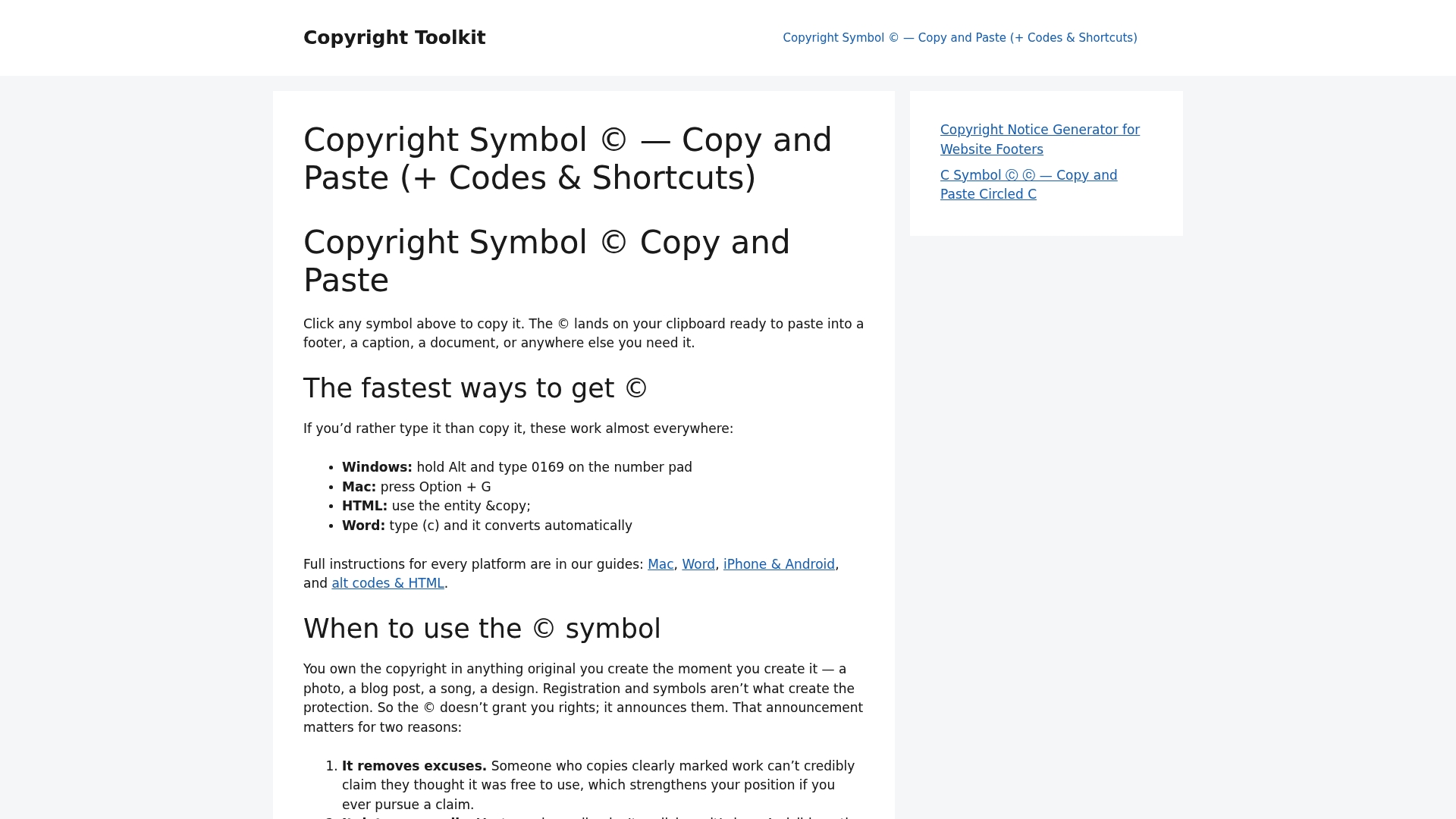
That’s the real advantage over hunting through a Character Map or fumbling a numeric keypad on a laptop that doesn’t have one: no keystroke to get wrong, no app-specific quirk to troubleshoot. If you’re also figuring out whether your mark should carry ® in the first place, the registered trademark symbol guide walks through both the typing method and the usage rules side by side. Bookmark Copyrighttoolkit and you’ve got every symbol shortcut in one place the next time you’re stuck mid-sentence.
Frequently Asked Questions
What is the fastest trademark symbol shortcut on a keyboard?
On Windows, Ctrl+Alt+T works inside Word and Outlook without a numeric keypad. On Mac, Option+2 is the fastest single-step shortcut.
How do I type the tm symbol if Alt codes don’t work?
Use Character Map on Windows or Character Viewer on Mac (Control+Command+Space), or copy the symbol from a resource like Copyrighttoolkit.
What is the HTML code for tm?
The HTML entity is ™, and the Unicode code point is U+2122. Either renders correctly in modern browsers.
Why does Option+2 give me the wrong symbol on my Mac?
Some non-US keyboard layouts assign Option+2 to a different character, like the euro sign. Switch to Character Viewer and search “trademark” instead.
Should I use ™ or ® for my brand?
Use ™ if your mark isn’t federally registered. Reserve ® only for marks that have completed federal registration; using it prematurely can create legal risk.
Sources
- Insert copyright, registered, and trademark symbols – Microsoft Support
- How to type the trademark symbol on an Apple keyboard — easy shortcut guide
- Trademark Symbols: What They Mean and When to Use Them – LegalClarity
- How to Type the Trademark Symbol